After the fire: build an interruption claim without losing the evidence
A practical review of loss chronology, revenue trends, saved costs and extraordinary recovery spending, with a hypothetical scenario and a contract comparison framework.
The decision behind the headline
This review focuses on loss chronology, revenue trends, saved costs and extraordinary recovery spending.
Build a counterfactual explaining what the repair business would have earned without the incident. Use seasonal sales history, accepted orders and recent changes, not just the strongest month in the accounts. If a major customer had already left, identify that fact. If the business was growing, preserve the evidence for the growth assumption. Separate invoices postponed until later from appointments cancelled permanently. An insurer’s required gross-profit basis may differ from the owner’s everyday use of that expression.
A hypothetical scenario to test
A repair business reopens quickly but cannot prove cancelled bookings or the normal revenue trend. This is an invented example, not a reported claim or a promised payout. Reconstruct the sequence from the first sign of trouble to ordinary service resuming. Ask what would happen if the problem occurred during a holiday or at the busiest time of year. The stress test should expose assumptions about availability and timing before they are relied upon.
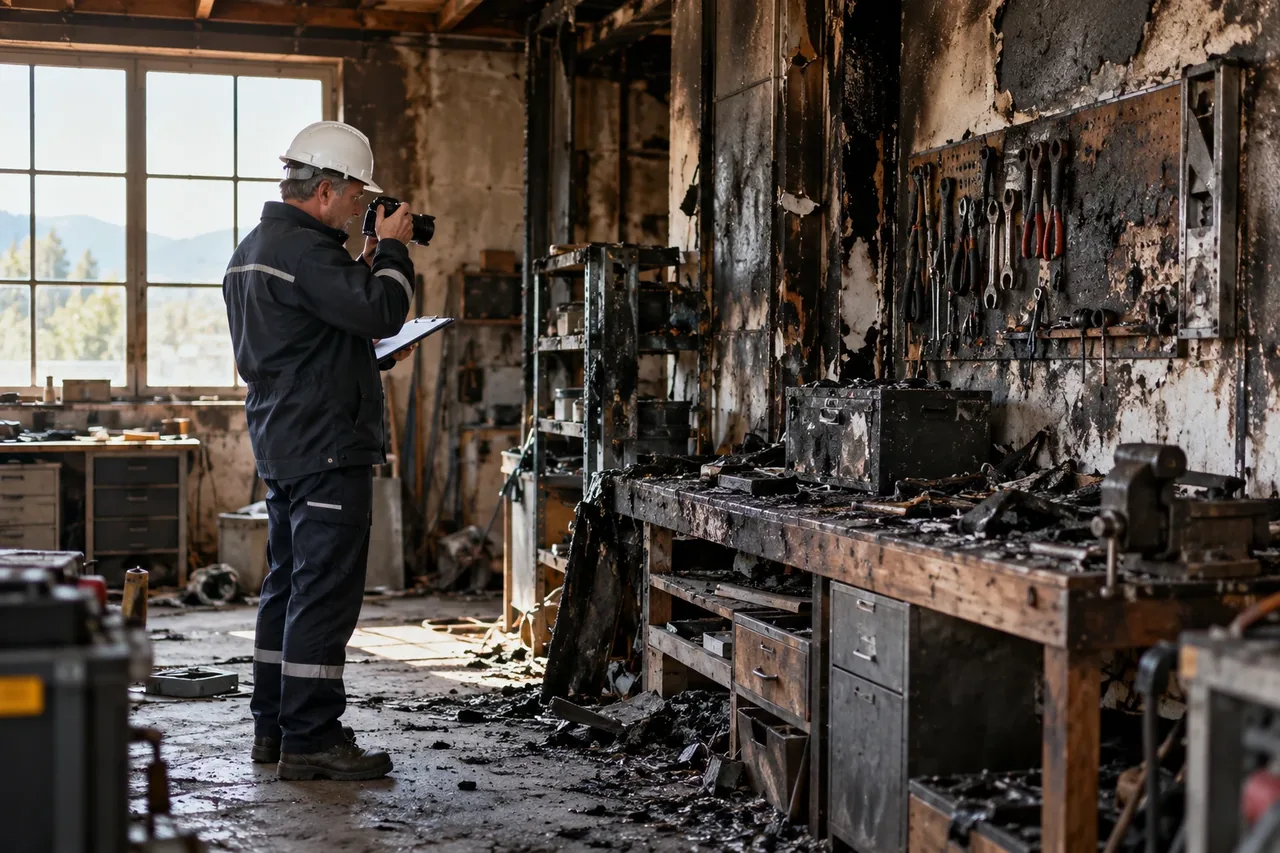
Assign one person to preserve the chronology while operations focus on reopening. Log each material decision with its time, reason and supporting estimate. Keep the original damaged-asset photographs and the record of authorised disposal rather than relying on reconstructed descriptions. Track recovery expenses in a separate ledger so ordinary costs are not double-counted. Where a claim consultant is considered, ask the insurer about any applicable appointment and fee rules before engagement. The goal is a loss calculation someone else can reproduce. A well-kept file does not guarantee acceptance, but it reduces the risk that a genuine commercial consequence is impossible to demonstrate after normal working patterns have resumed.
Identify the contractual boundary
A before-and-after turnover comparison should explain unrelated trends. Growth, a lost customer before the incident or a scheduled closure can change the counterfactual. Keep the assumptions transparent and ask the claims specialist which calculation basis the contract requires instead of choosing the most favourable headline figure.
Compare the wording, then the price
Use an identical scenario with each insurer and request clarification of notification requirements, mitigation, expert approval and calculation documentation. Ask for the relevant clause and a written explanation of anything left uncertain. An optional extension should appear in the schedule, not merely in a sales discussion.
Reduce the exposure before transfer
A useful first action is to assign a claims coordinator and back up sales records away from the premises. Assign an owner, a completion date and a simple test of whether the measure works. Written procedures matter only if staff can find and use them under pressure.
Evidence and the next review
Prepare sales history, order book, cancellations, repair invoices and incident timeline. Date the records and keep an accessible copy away from the affected process. Deductible funding and the delay before a payment should sit in the continuity budget. Review the arrangement when your activity, technology, locations or counterparties change.
Sources and further reading
Original Clearwise analysis. External reporting provides context; rules and contract terms must be verified with the competent authority or provider. Some press articles may require a subscription.
Apply this to your situation
Compare your actual documents and clarify what matters before making a commitment.
Request a free consultationGeneral guidance, not a binding quote or personalised legal, tax or investment advice. Examples are hypothetical and results are not guaranteed.