Hail dents: document the event before choosing the repair
Keep hail separate from parking damage, obtain the insurer’s repair instructions and compare a settlement with the vehicle’s future use.
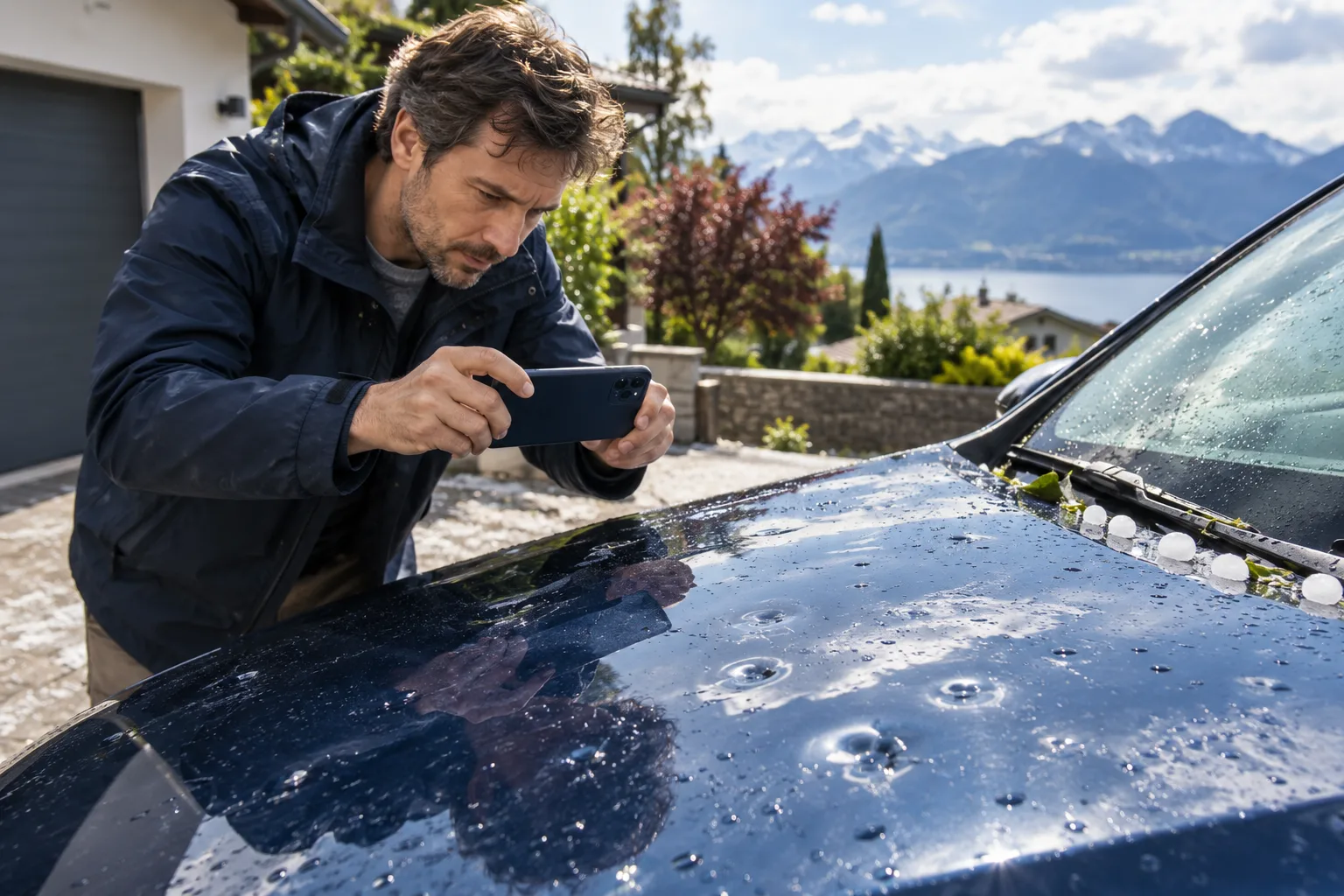
Identify the event, not just where the car stood
A car can be damaged while parked without the loss being parking damage in insurance terms. Hail is the cause to document when a storm leaves dents in the bodywork. This dossier, checked on 17 October 2026, explains claim preparation rather than promising a particular settlement. AXA's Swiss guidance places hail damage within partial casco; other contracts must be checked on their own wording. Liability-only insurance should not be confused with protection for your own vehicle. Find the policy schedule, relevant deductible and insurer's reporting channel before making assumptions from the place where you discovered the dents.
Preserve evidence and get repair instructions
When it is safe, record the date, location and visible damage with photographs from several angles. Keep earlier damage separate and explain any uncertainty rather than attributing every mark to the storm. AXA describes a reporting and assessment process before repair arrangements. Ask your own insurer whether an inspection, approved repairer or estimate is required and how urgent protective work should be handled. A cracked windscreen that affects safety needs professional attention; do not keep driving solely to preserve a convenient claim sequence. Avoid authorising cosmetic repairs before you understand what has been approved and which costs you might retain.
A hypothetical deductible calculation
Suppose an accepted hail repair is assessed at CHF 3,600 and the applicable hypothetical deductible is CHF 500. The simple balance is CHF 3,100 before other contractual adjustments. These invented amounts are not typical tariffs, and the calculation assumes the event and entire repair are covered. Ask whether the assessment includes all affected panels and how any existing damage is treated. Do not automatically add a replacement car, travel expenses or a chosen garage's extra charges to that figure. Obtain separate confirmation for each additional service and note who will invoice whom so the payment route is clear before the work begins.
Repair and cash settlement have different consequences
If the insurer offers alternatives, compare them in light of leasing conditions, planned sale, future repairs and your intended use of the vehicle. A cash amount should not be interpreted as proof that repairing later will cost the same. Ask how an unrepaired loss is recorded and how a later claim involving the same panels would be assessed. Check any financing-party consent rather than assuming the driver alone can decide. Cosmetic acceptability, safety and contractual obligations are separate issues. The cheapest immediate choice can create uncertainty at return or resale if the condition of the vehicle has not been documented clearly.
For recent context, SWI’s report of 3 September 2026 describes assessment centres and pressure on replacement-car availability after hailstorms. That event-specific reporting helps explain why repair logistics deserve a separate question; it is not confirmation of your own assistance benefits.
Close the claim with a complete record
Retain the assessment, authorisation, photographs, repair invoice or settlement agreement, and confirmation of any deductible. Ask about the actual no-claims treatment under your contract instead of importing rules from a different country or insurer; AXA's published Swiss hail guidance, for example, describes its own bonus treatment. Review whether your chosen deductible still fits the loss you can absorb, without treating a single storm as a reason to change everything. Clearwise can help compare the claim documents and policy questions. The insurer and repair professional confirm the covered scope, safe repair method and final payment arrangement for this vehicle.
Sources and further reading
Original Clearwise analysis. External reporting provides context; rules and contract terms must be verified with the competent authority or provider. Some press articles may require a subscription.
Apply this to your situation
Compare your actual documents and clarify what matters before making a commitment.
Request a free consultationGeneral guidance, not a binding quote or personalised legal, tax or investment advice. Examples are hypothetical and results are not guaranteed.