Broken shopfront glass: separate the pane, the lease and lost trading
Map who insures the shopfront and which emergency, replacement and interruption costs need their own confirmation.
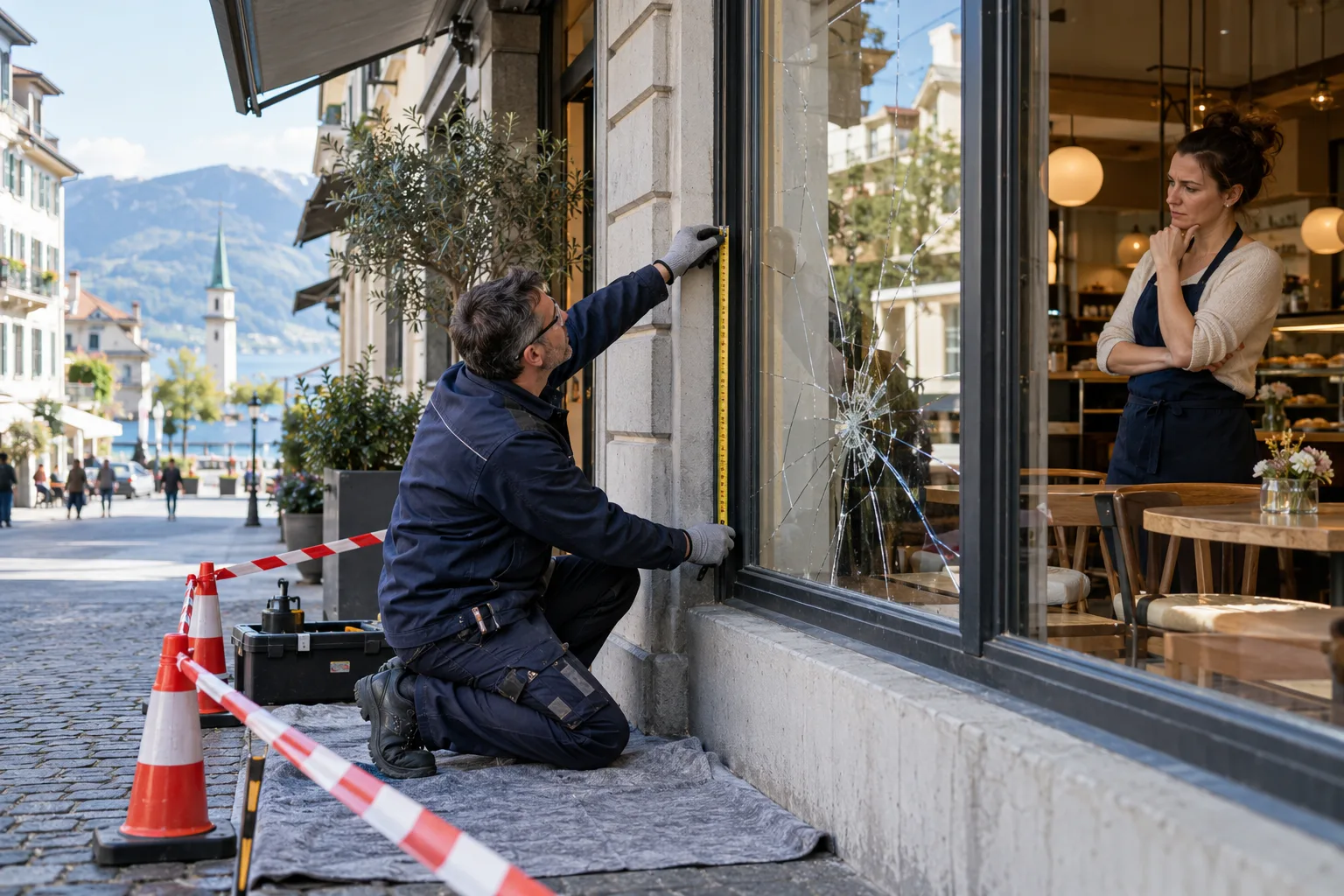
A visible break can hide several cost owners
The pane is shattered, customers cannot use the entrance and the business needs a prompt decision. It is tempting to treat the entire incident as one glass bill. Checked on 17 October 2026, this dossier helps a Swiss commercial tenant or owner separate property, contractual responsibility and lost trading. Start with safety and emergency protection, then identify who owns and maintains the affected glazing. A lease obligation does not itself establish insurance cover. Equally, a landlord's building policy should not be assumed to reimburse every tenant expense. Keep the emergency contact list available before a break occurs, not only after normal office hours.
Find the insured object and location
AXA's business-property presentation describes glass cover that can include building and furniture glazing, while its building product addresses a different insured asset category. These are product examples, not confirmation for your shopfront. Read your schedule for the insured premises, glass category, limits and deductible, and ask how it coordinates with the owner's policy. Distinguish the pane from lettering, frames, security film, sensors and display equipment. A single replacement quotation may contain all of them even if the contract treats them differently. Tell the insurer whether the premises are owned or rented and supply the relevant lease provisions when requested.
A hypothetical quotation in separate lines
Imagine a shop receiving an illustrative CHF 6,000 quotation: CHF 700 for emergency boarding, CHF 4,500 for replacement glazing and CHF 800 for signage. The business also estimates CHF 1,200 of lost margin. Those four lines are not automatically one CHF 7,200 covered claim. Ask which amounts are accepted, whether the estimate needs approval and what evidence is required for each. The figures are invented, with no VAT or deductible assumption. If a hypothetical CHF 500 deductible applies once to the full accepted CHF 6,000 repair package, the simplified balance is CHF 5,500; that does not establish any interruption payment.
Secure the premises without losing the evidence
Keep people away from unsafe glass and use competent emergency professionals. Notify the insurer promptly and ask how urgent temporary work should be documented where advance approval is impractical. Photograph the condition only when safe, retain invoices and preserve relevant evidence without storing dangerous fragments unnecessarily. Ask the glazier to separate temporary protection from the permanent specification and explain any proposed upgrade. A faster replacement or stronger glass may be commercially sensible without every extra cost being insured. Coordinate with the owner before altering building components and keep the decision trail clear, especially when several parties give instructions to the same contractor.
Treat reopening as its own planning task
Ask whether the business can operate safely behind temporary protection and what delivery timing is realistic. Record actual closure periods and avoid presenting turnover as lost profit. Business interruption, extra operating costs and rent issues need their own policy and legal assessment; glass replacement approval does not answer them automatically. After the incident, compare the premises inventory with the actual shopfront and update the emergency contacts. Clearwise can help map the expense categories and questions between tenant, owner and insurer. The contract and claim assessment determine payment; practical continuity planning remains valuable even when only part of the overall disruption is insured.
Sources and further reading
Original Clearwise analysis. External reporting provides context; rules and contract terms must be verified with the competent authority or provider. Some press articles may require a subscription.
Apply this to your situation
Compare your actual documents and clarify what matters before making a commitment.
Request a free consultationGeneral guidance, not a binding quote or personalised legal, tax or investment advice. Examples are hypothetical and results are not guaranteed.