A wildlife collision: safety, reporting and the policy trigger
Contact with an animal and a collision while avoiding one may raise different insurance questions. Preserve the facts without putting yourself at risk.
The roadside response comes before the claim
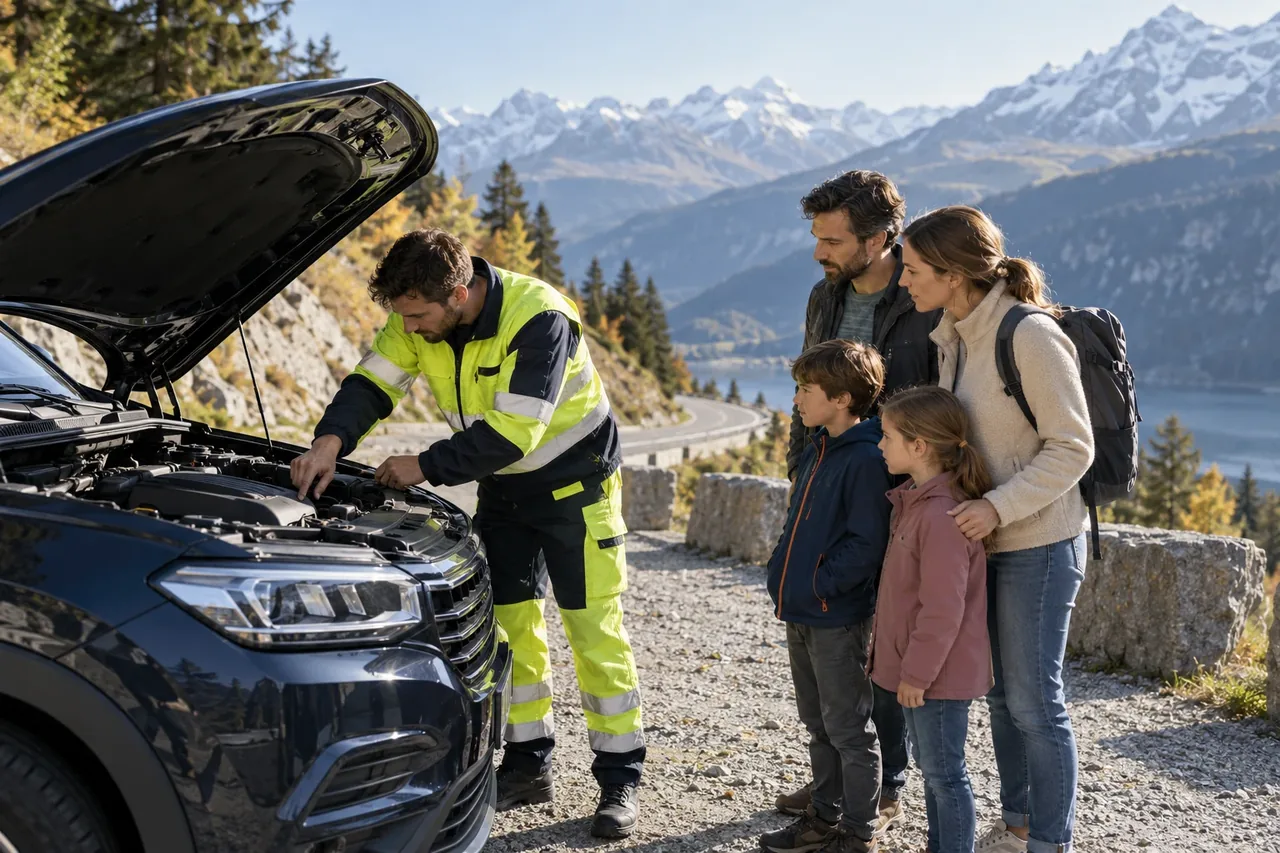
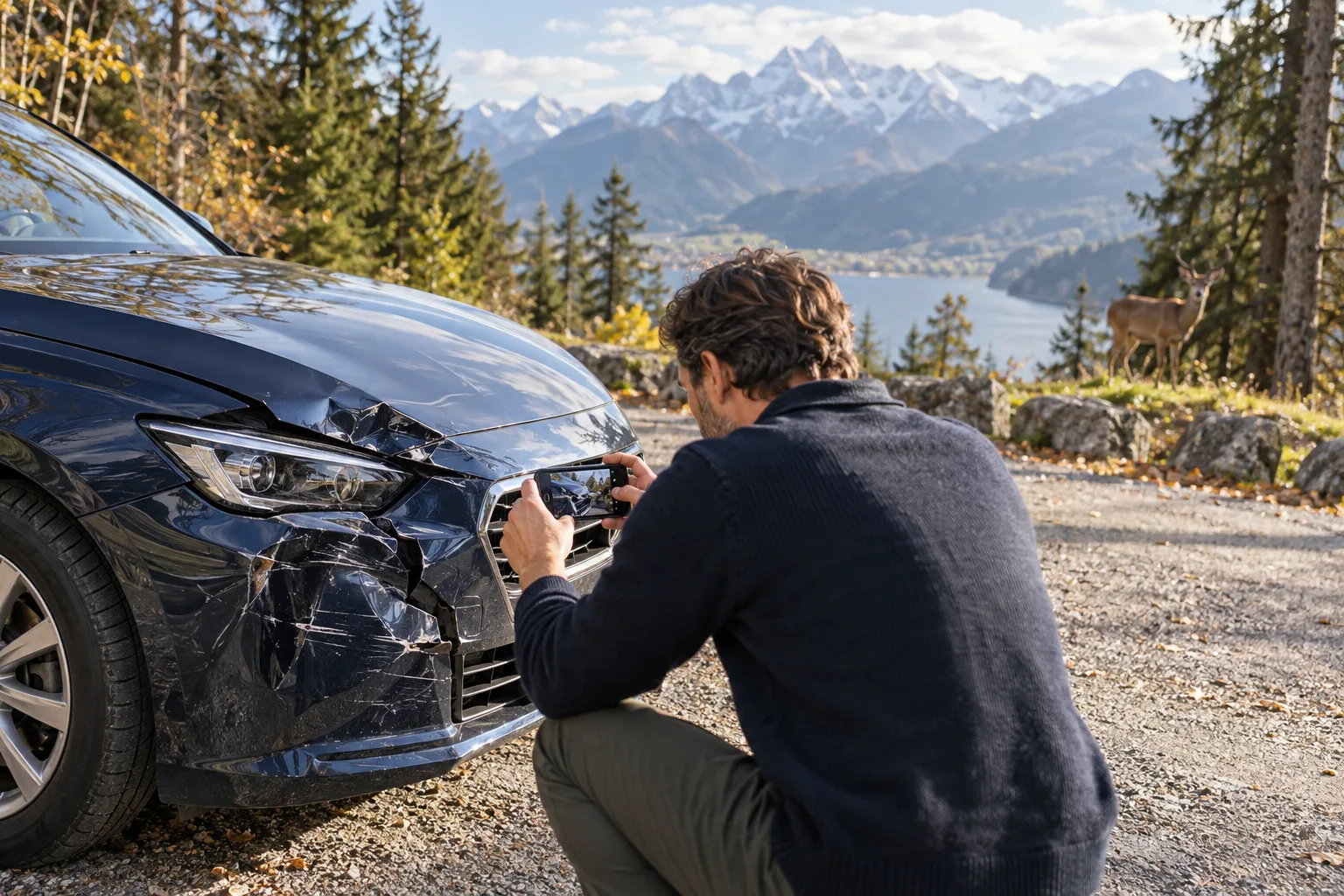
A deer on the road can turn a routine commute into a dangerous situation in seconds. After an incident, prioritise people and traffic safety, call emergency services where needed and follow police instructions. Do not approach or chase an injured wild animal. The Bern cantonal police guidance checked on 14 October 2026 instructs drivers to report wildlife collisions immediately and wait for the wildlife officer or police. Use the competent local contact, not a number copied from another canton without checking. Photographs are useful only when they can be taken safely; no insurance file justifies remaining in an exposed traffic lane.
Describe contact and sequence accurately
Record location, time, direction of travel, damage and whether physical contact with the animal occurred. If you swerved and hit a barrier without touching the animal, say so. Insurers distinguish defined animal damage from other collision events; the applicable wording, evidence and circumstances decide which cover is relevant. AXA's current partial-casco description includes collisions with animals, but it does not make every evasive manoeuvre the same event. Do not reshape the account to fit a preferred module. Keep the police or wildlife report reference and ask the insurer which evidence it needs before authorising non-essential repairs.
A hypothetical claim comparison
Imagine a car repair is estimated at CHF 3,000 after documented contact with a deer. Assume, purely for illustration, that the event is accepted under a relevant casco module with a CHF 200 deductible. The remaining covered repair amount would be CHF 2,800, before any other applicable conditions. Now imagine an otherwise similar car hits a wall while avoiding the deer but has no animal contact. Do not carry over that arithmetic automatically: the collision module and its deductible may differ or be absent. The example demonstrates classification risk, not a promise that either insurer will accept a real claim.
Check the costs around the damaged panel
The repair bill is only one potential expense. Ask whether towing, storage, a replacement vehicle and onward travel are covered, who must arrange them and whether approval is needed. Check the vehicle's roadworthiness with the appropriate professional rather than driving a damaged car to avoid a recovery charge. Keeping collision cover may cost more than partial casco, but the difference includes incidents that are not direct animal contact. Reducing cover can be reasonable for a lower-value car if the household can absorb the retained risk. Make that decision before an incident, with the actual wording and financing obligations in view.
Prepare the next journey without false certainty
Store the insurer's claims and assistance details, review deductibles and explain the reporting procedure to everyone who uses the car. On wooded stretches, adapt speed and attention to visibility and local conditions; good insurance cannot prevent injury. The linked press article is historical context from 13 October 2021, not a current national loss estimate. After a claim, retain correspondence, photographs and the final settlement explanation. Review any difference between expected and actual cover at renewal. Accurate facts and a safe response support a fair assessment; they do not guarantee payment for every vehicle damage associated with wildlife.
Sources and further reading
Original Clearwise analysis. External reporting provides context; rules and contract terms must be verified with the competent authority or provider. Some press articles may require a subscription.
Apply this to your situation
Compare your actual documents and clarify what matters before making a commitment.
Request a free consultationGeneral guidance, not a binding quote or personalised legal, tax or investment advice. Examples are hypothetical and results are not guaranteed.