Driving abroad: prepare the claim before crossing the border
Liability proof, assistance, casco, police reports and repair approval follow different rules; a small travel file prevents improvised decisions after a collision.
Swiss cover travels, but not every service identically
A Swiss-registered car has compulsory liability insurance, but the territorial validity, proof documents and claim representatives depend on the destination and international arrangements. Casco and roadside assistance are contractual: towing distance, replacement car, repatriation, driver accommodation and repair-network rules can differ abroad. The international motor-insurance card remains useful or required for certain countries, while it is unnecessary in others. Before departure, the driver should ask the insurer for the current country list and documents rather than rely on a glove-box card printed years ago.
Prepare one offline travel pack
Carry registration, driving licence, insurer emergency number, assistance number, accident report and any required international card. Store digital copies separately, not only in the phone that might be damaged. Confirm who may drive, whether young-driver or named-driver restrictions apply, and which countries are excluded. Check leasing permission for travel outside the normal territory. Record how to obtain repair approval and whether the vehicle must go to a partner garage. Emergency equipment and local road rules remain the driver’s responsibility; insurance documents do not make an unsafe journey lawful.
A hypothetical French collision
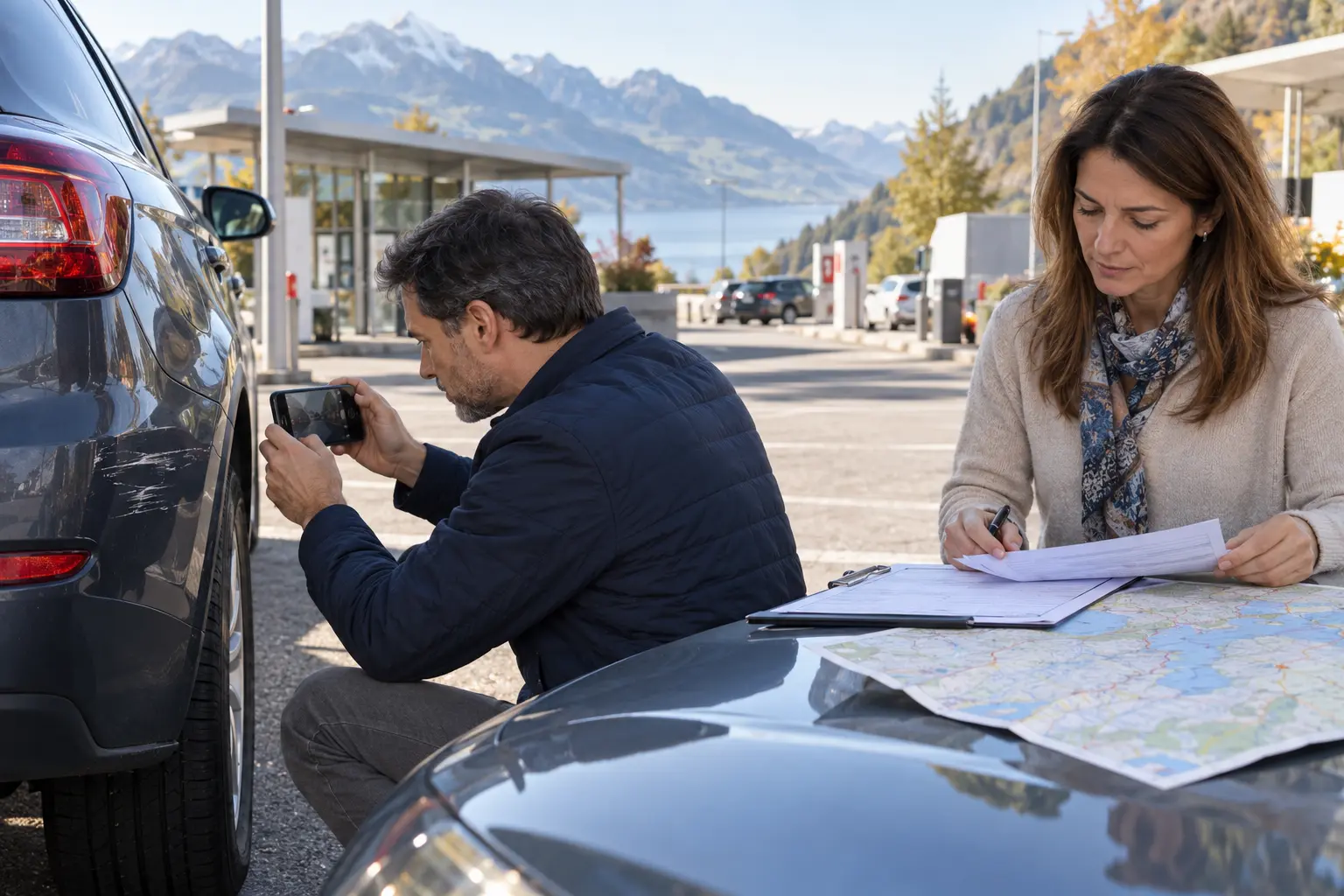
On a weekend in Lyon, Petra reverses into another vehicle at low speed. Nobody is injured. She secures the area, photographs positions and plates, exchanges verified contact and insurer details, and completes a joint accident report without admitting more than the facts. She calls the Swiss insurer before authorising a repair and keeps the damaged parts. Assistance is not needed, but the liability claim and her casco damage follow separate files and deductibles. If the other driver refused details or an injury appeared, police and medical documentation could become essential. The example does not decide fault.
Convenience and control trade off
A broad assistance package reduces logistical stress but may duplicate car-manufacturer, credit-card or leasing benefits. Free garage choice preserves control but can raise premium or reduce guarantees offered through a partner network. A low casco deductible helps after small damage but increases ongoing cost. Immediate repair abroad restores mobility, yet proceeding without approval can create a valuation dispute. Repatriating the car may take longer and cost more than local repair. The right arrangement reflects trip frequency, destinations, vehicle value and the household’s ability to organise an incident in another language.
At the roadside, follow a calm sequence
Protect people, call emergency services where required and avoid moving vehicles when local law or safety says otherwise. Photograph the scene, surroundings, damage, plates and documents; identify witnesses and complete the report accurately. Contact the insurer or assistance through a trusted number before towing or repair when practical. Never surrender originals or sign text you do not understand. Keep receipts, medical notes and travel disruption evidence. On return, reconcile liability, casco and assistance decisions separately. Preparation cannot prevent a foreign claim, but it preserves evidence and avoids paying for services the policy expected to authorise first.
Sources and further reading
Original Clearwise analysis. External reporting provides context; rules and contract terms must be verified with the competent authority or provider. Some press articles may require a subscription.
Apply this to your situation
Compare your actual documents and clarify what matters before making a commitment.
Request a free consultationGeneral guidance, not a binding quote or personalised legal, tax or investment advice. Examples are hypothetical and results are not guaranteed.