Solar panels and batteries: update the property cover before commissioning
A commercial energy installation changes replacement value, machinery exposure, interruption scenarios and the boundary between owner and tenant.
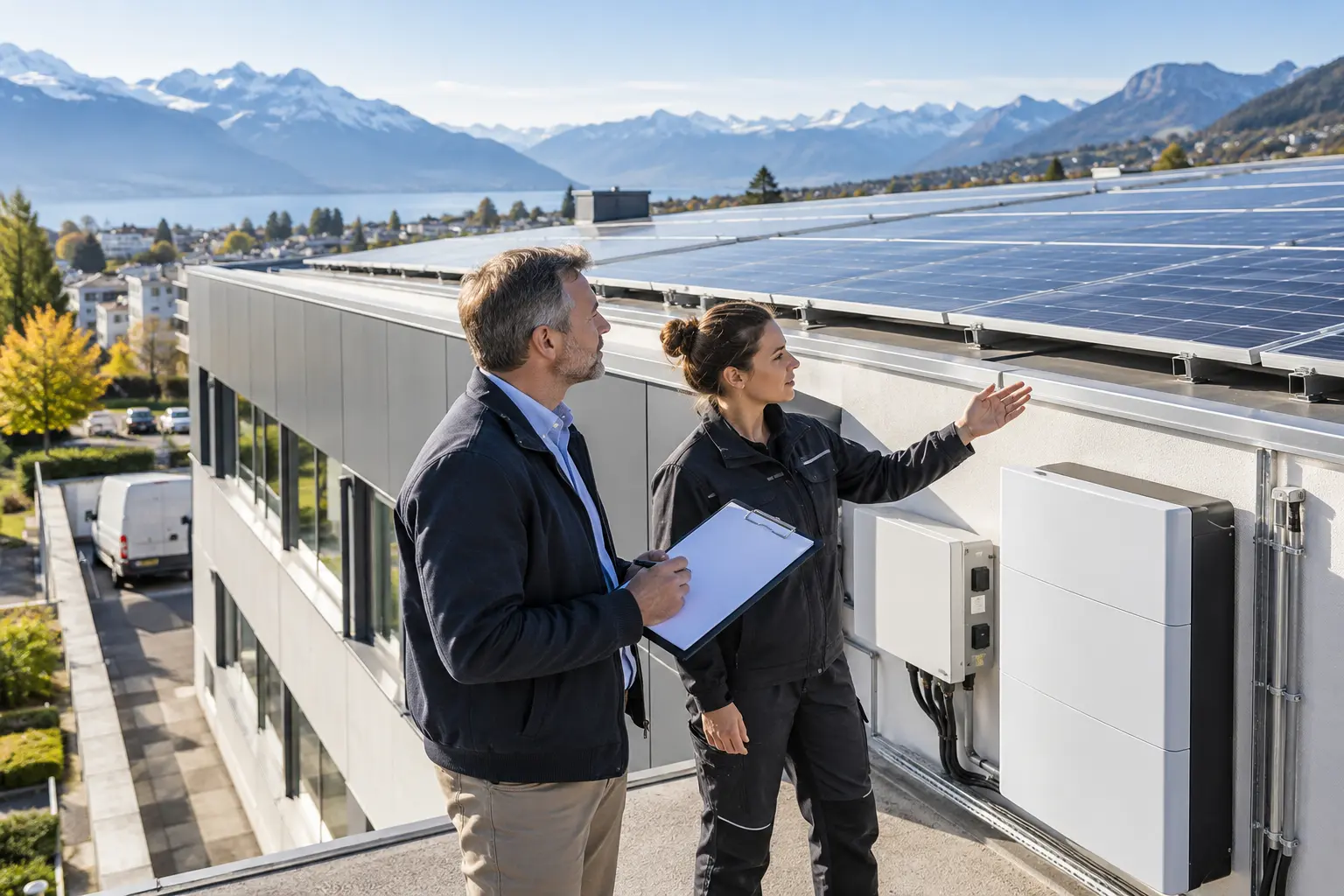
The project changes more than the roof
Photovoltaic panels, inverters, cabling and battery storage add assets and dependencies to a commercial building. Depending on the canton, building insurer and ownership structure, some components may fall under building insurance while others need machinery, electronics or contents cover. Fire and natural-hazard protection does not automatically answer breakdown, faulty operation, loss of yield or business interruption. If a tenant financed the equipment on a landlord’s roof, insurable interest and maintenance duties must be explicit. The correct update begins with ownership, replacement cost and operating consequences, not with the panel count alone.
Create an asset and dependency map
List modules, inverter, optimisers, battery, control system, meters, chargers and structural work with invoices and serial numbers. Record who owns each item, who maintains it and what warranty applies. Ask the installer for fire-safety documentation, commissioning tests and a production estimate. Map what happens if the inverter fails, the battery is isolated or grid export stops: can the business operate, for how long and at what extra cost? Update the building value and contents schedule before commissioning. A subsidy or depreciated accounting value is not the same as the cost to replace equipment after a loss.
A hypothetical warehouse installation
A food distributor adds a 180-kilowatt rooftop system and battery to reduce daytime grid purchases. The building policy is increased for permanent works, while a machinery endorsement covers defined electrical breakdown. The interruption review finds that solar loss alone would not stop refrigeration, but a battery fire could close the loading area during cleanup. The company sets a realistic indemnity period, confirms whether lost feed-in revenue is covered and requires the maintenance contractor to document remote alarms. Six months later an inverter fails; warranty may pay the part, while labour, crane access and lost output depend on separate terms.
Tradeoffs hidden in broad labels
All-risks wording can still contain wear, gradual deterioration, cyber, design and performance exclusions. Breakdown cover costs more but may matter for expensive power electronics; a high deductible may be reasonable when several small inverters provide redundancy. Insuring theoretical revenue at an optimistic yield inflates premium and may not match the loss calculation. A long interruption period protects against supply-chain delays but requires credible financial records. The cheapest proposal may split one system across insurers, creating coordination work. Conversely, placing everything with one insurer does not remove contractual boundaries between building, equipment and lost income.
Close the insurance workstream
Send final plans, invoices, ownership agreements, warranties and commissioning certificates to the insurer and obtain written confirmation of values and sections. Verify fire authority and grid approvals, then record roof access and emergency isolation procedures. Test alarms and back up configuration data. Agree who reports a loss and who can authorise urgent work. Review declared output and interruption figures after the first operating year. After hail, fire or breakdown, secure the area, preserve logs and notify every potentially relevant insurer without duplicating recovery. Insurance can fund defined physical and financial losses; maintenance, safe installation and resilient operations remain indispensable.
Sources and further reading
Original Clearwise analysis. External reporting provides context; rules and contract terms must be verified with the competent authority or provider. Some press articles may require a subscription.
Apply this to your situation
Compare your actual documents and clarify what matters before making a commitment.
Request a free consultationGeneral guidance, not a binding quote or personalised legal, tax or investment advice. Examples are hypothetical and results are not guaranteed.